

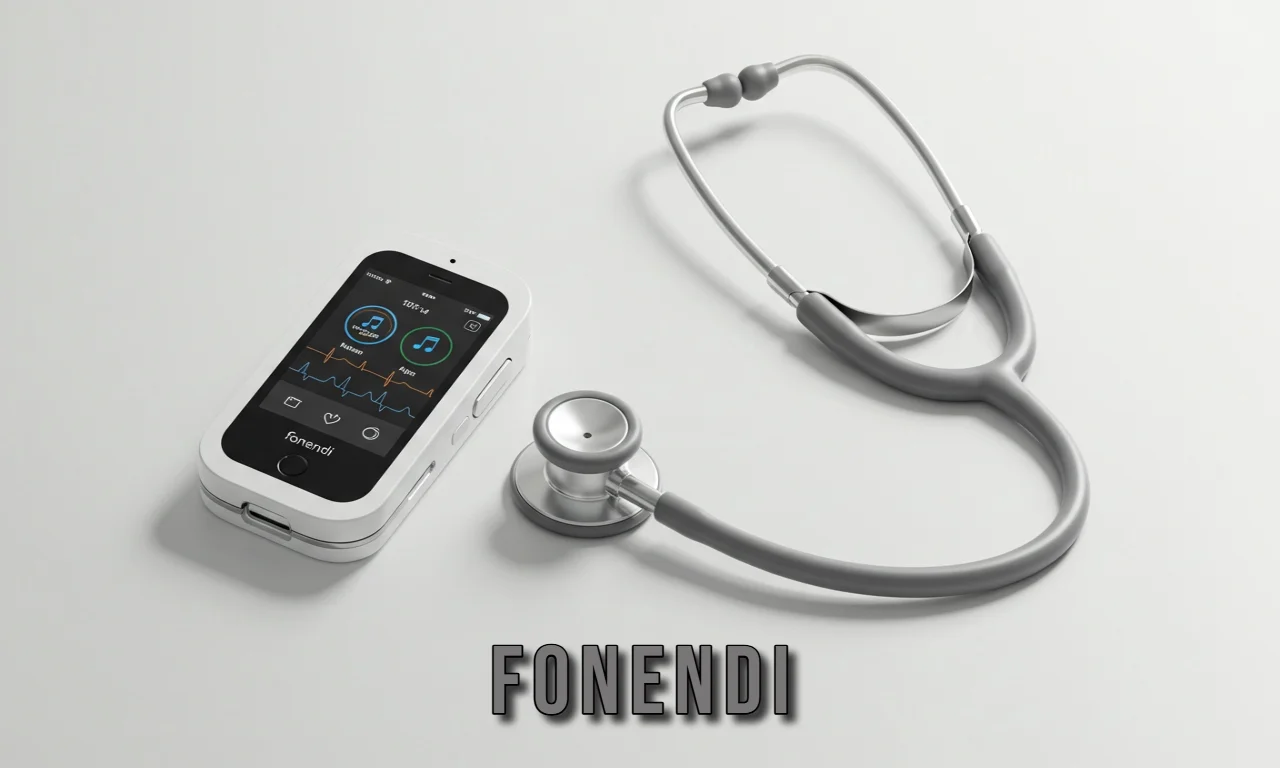
It is one medical instrument that is practically known by everyone in hospitals, clinics, and even small rural health centers. It is tied to the neck of a doctor, it is kept in the pocket of a nurse, but it silently and strongly contributes to diagnosis. This tool is commonly referred to as fonendi in most of these locations most notably in Europe, South Asia, and some of the Middle East.
Although the name might sound strange to others, it commonly means the phonendoscope or a stethoscope, which is a necessity to hear the inner sounds of the human body. It not only medical equipment. It symbolizes hope, confidence, and the first move in getting to know what is going on in the body of a patient.
This article will examine the meaning of fonendi, its origin, mechanism, medical significance and the reason why the term is still applicable in the modern world of sophisticated healthcare.
What Is Fonendi?
The term fonendi is a colloquial or abbreviated version of phonendoscope, which in its turn is a kind of stethoscope. In common practice, it usually means the tool used by physicians to hear heartbeats, lung sounds, blood flow, and bowel movement.
Fonendi is fundamentally a sound medical instrument. It is not based on electricity or display screens. Rather, it enhances internal body sounds and transfers them to the ears of the healthcare professional. Although it is simple, it includes invaluable information that no blood test or scan will be able to substitute at once.
The History of the Title Fonendi.
- fonendi is a Greek-origin word,
- as follows: “Phono” meaning sound
- “Endo” meaning inside.
- They both refer to the concept of hearing inner sounds.
Throughout the years, the term had been modified by the various language and cultures using the term “fonendi” in informal or local dialect. Whereas most medical textbooks are currently using “stethoscope” as the standard term, it is commonly called fonendi by many practitioners, in informal usage.
A Little History of the Fonendi
Listening in Medicine
The Birth of Listening. Prior to the discovery of stethoscope, the only method doctors could use to analyze internal organs was to feel the patient. During the early 19th century, doctors frequently put their ears right on the chest of a patient- a procedure that was painful as well as inaccurate.
The first stethoscope was invented in 1816 by a French physician called Rene Laennec who rolled a roll of paper into a tube to hear the heart of a patient. This basic invention transformed the diagnosis process in medicine.
It developed into the Phonendoscope
The phonendoscope emerged later and enhanced the amplification of sound specifically in the high frequency sounds like the heart murmurs. This polished form nowadays comes to be known by many as fonendi. The materials were refined over the decades and sound was better and the design more ergonomic – yet the principle of it was not changed.
How Does a Fonendi Work?
The working of a fonendi is the loveliest thing of all:
- Chest Piece: The chest plate is applied flat or two-sided on the body of the patient.
- Sound Collection: Internal organs (heart, lungs, intestines) give vibrations through the piece of the chest.
- Tubing Transmission: Such vibrations are passed on rubber or PVC tubes that are flexible.
- Ear Tips: The noises are transmitted to the ears of the health provider where they are enhanced and isolated of any outside noise.
Some models include:
- High-frequency sounds on the diaphragm side.
- At the side of the belly where the sound is low.
Medical Uses of Fonendi
1. Listening to the Heart
Cardiac auscultation is one of the most useful applications. Doctors can detect:
- Heart rate and rhythm
- Murmurs Valve problems
2. Examining the Lungs
Fonendi assists physicians to exam breathing by hearing:
- Wheezing
- Crackles
- Reduced airflow
- Abnormal breath sounds
This plays a very vital role in the diagnosis of asthma, pneumonia, bronchitis, and other respiratory diseases.
3. Measuring Blood Pressure
Fonendi can be applied together with a sphygmomanometer to enable healthcare professionals to:
Listen to blood passing in arteries. This is a manual system that is taken to be very reliable despite the digital machines.
4. Observing the activity of the digestive system
It basically used by doctors to listen to bowel sounds, which helps to evaluate:
- Intestinal movement
- Blockages Digestive health
The absence or unusual noises may be indicators of severe disorders that need urgent attention.
5: Prenatal Care
Some environments have employed the use of fonendi to hear the fetal heartbeats, and this has been very reassuring to both the expectant parents and the medical practitioners.
Types of Fonendi
Classic Fonendi
-
Basic design
-
Durable and affordable
- Widely applied to general practice
Pediatric Fonendi
-
Smaller chest piece
-
Targeted at children and infants
Cardiology Fonendi
-
Superior sound quality
-
Exquisitely sensitive to fine sounds of the heart
Electronic Fonendi
-
Amplifies sound digitally
- Applicable in noisy places.
- Frequently has a record function.
Why Fonendi Still Matters in Modern Medicine
Having high-quality imaging equipment such as MRI, CT scans, and ultrasounds, it may be a question why fonendi is still in use? The solution is in its rapidity, easiness, and human contact.
-
Requires no electricity
- Is cheap and available
- Promotes close contact with patients
The doctor who listens using a fonendi is not simply collecting information- he/she is interacting, watching and relating.
Fonendi as a Symbol of Care
Fonendi has a symbolic and emotional meaning, in addition to its technical one. To most patients, when a doctor puts a fonendi on their chest, they are assured. It is an indicator of attention, concern and professionalism.
To medical undergraduate students, their entry into the healthcare sector is usually on the first fonendi. It becomes an individual possession, an everyday item and something to rely on.
Common Misconceptions About Fonendi
-
“It’s outdated”
In reality, it remains one of the most effective diagnostic tools. -
“Digital tools are always better”
Technology helps, but human interpretation is still essential. -
“Anyone can use it”
Proper training is required to correctly interpret sounds.
Raising a Fonendi: Preserving Accuracy, Hygiene and Longevity
A fonendi might appear to be a straightforward tool of medicine, but it is an accurate medical tool. It is necessary to take good care not only on hygiene, but also sound quality and proper diagnosis.
Regular Cleaning for Safety
Cleaning a fonendi on a regular basis is one of the most significant issues in its care. It may easily be contaminated by bacteria, sweat, skin oils, and dust since it touches on several patients. The ear tips regularly washed, particularly in case the fonendi shared.
The soft ear tips may be cleaned with warm water and mild soap and it can be removed. When washed, they must be dry thoroughly before being put back otherwise moisture will accumulate and this may compromise comfort and hygiene. Chest piece touching the skin of the patient should be wiped with the help of alcohol wipes or another disinfectant suggested by the manufacturer.
This is of particular importance in hospitals and clinics where the issue of infection control is important. Cross-contamination avoided and both patients and healthcare workers are protected by means of regular disinfection.
Extreme Temperatures
Fonendi materials (particularly, the tubing) are sensitive to temperature change. The tubing may become hard, cracks or lose its elasticity due to overexposure to either extreme temperatures of cold or heat. Exposing a fonendi to hot weather conditions in the car or radiators, or direct sunlight may cause the destruction of the rubber tubing.
The same way, very low temperature conditions may cause brittleness of the material. Once the tubing is no longer flexible, it becomes less effective in transmiting the sound and thus, the accuracy of the auscultation decreases.
Also warming the chest piece with a little pressure in your hand and then putting it on a patient will help to make it more comfortable and eliminate the possibility of cold-shock.
The Future of Fonendi
Modern innovations are enhancing fonendi without replacing it. Smart devices can now:
-
Record sounds
-
Share data remotely
-
Assist in telemedicine
-
Use AI for sound analysis
Conclusion
Fonendi might seem to be plain, yet it is influential in health care. It also teaches us that at times listening is the way to get the most significant answers. It makes us remember that in a world of machines and screens, medicine is not only about technology, it is also about human interaction, close paying attention, and trust.
Fonendi or stethoscope or phonendoscope, whatever its name, this simple device still listens, one beat of the heart to the next, to the life itself.
